

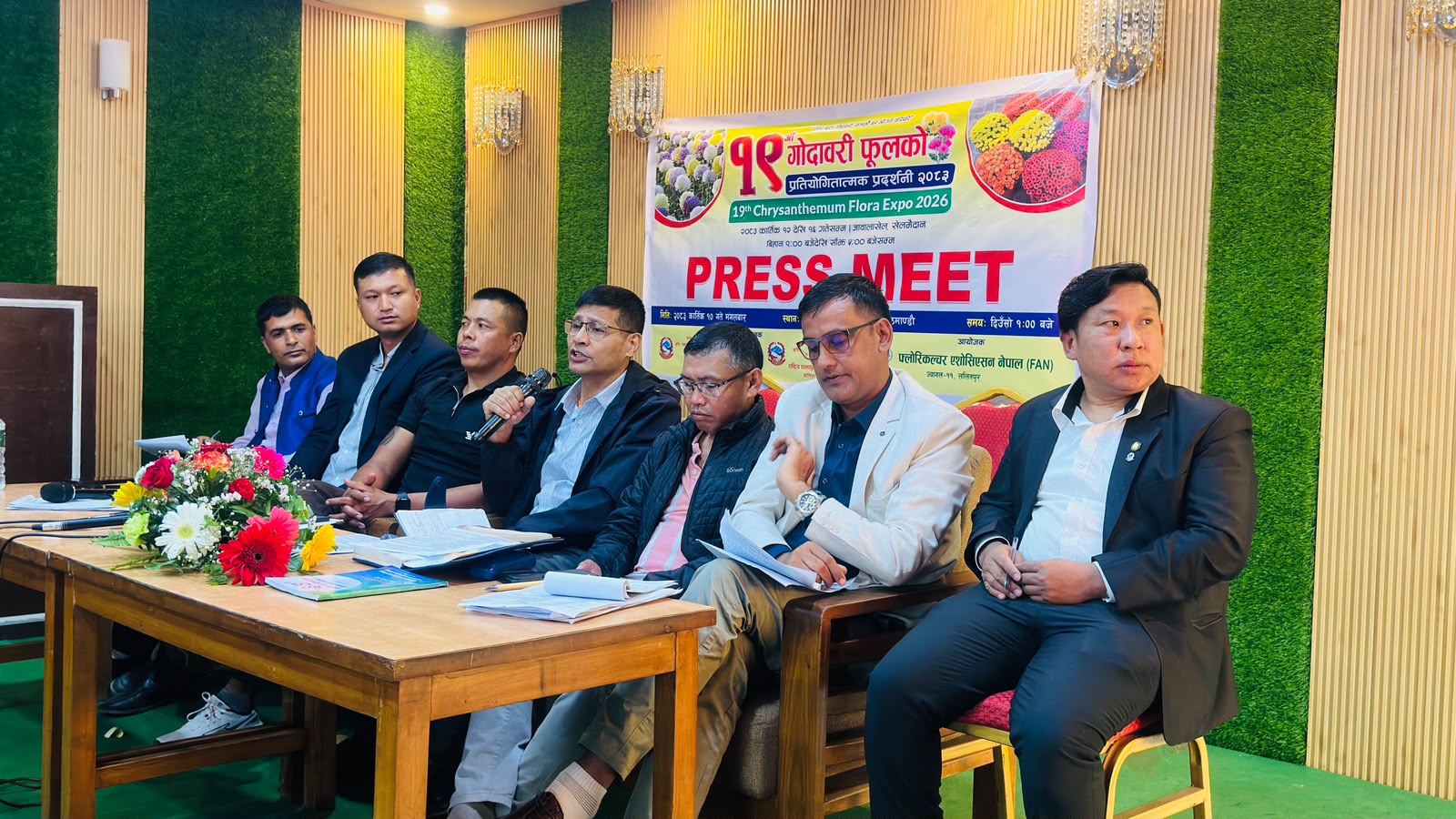
Kathmandu_ Around 5.18 million flower garlands are expected to be consumed during Tihar this year, as demand for flowers rises ahead of the festival. The Floriculture Association Nepal (FAN) is organizing the 19th Godavari Flower Competition and Exhibition at Jawalakhel, Lalitpur, from October 29 to November 2.
According to FAN’s preliminary estimate, approximately 4.5 million marigold garlands, 600,000 globe amaranth garlands, 20,000 chrysanthemum garlands and 60,000 mixed-flower garlands will be consumed during Tihar. Most of the demand is expected to be met by domestically produced flowers.
The exhibition, organized targeting the Tihar and Chhath festivals, will feature 86 stalls, including commercial stalls, plant clinics, official and competition stalls, and photo and selfie booths. More than 450 varieties of flowers and plants, including commercially cultivated chrysanthemums and newly introduced varieties, will be displayed and sold.
The exhibition will be held under the slogan “Grow Chrysanthemums, Decorate Your Home and Surroundings.” Chrysanthemums will compete in five categories: miniature, spider, reflex, incurve and cut flower. A new category for outstanding floral arrangements has also been introduced under the cut-flower section. Outstanding nurseries and farms will receive awards in different categories.
In addition to chrysanthemums, the exhibition will offer marigolds, globe amaranth and other seasonal flowers and ornamental plants for the Tihar festival. A team of experts will also provide plant-clinic services to help visitors identify and address plant diseases and pest-related problems. The exhibition will also showcase developments and technologies in the floriculture sector.
According to FAN, approximately four million commercially produced marigold garlands were consumed during Tihar last year. Although continuous rainfall from October 9 to 11 damaged marigold crops in some areas this year, domestic production is expected to supply around four million garlands. Preparations are underway to bring flowers from local and rural production areas to markets and arrange additional supplies if necessary.
Commercial marigold cultivation is expanding across all seven provinces. FAN’s preliminary survey shows that marigolds are being commercially cultivated on more than 225 hectares nationwide. While demand in rural and production areas is almost entirely met by domestic flowers, local production is estimated to meet around 88.89 percent of demand in major urban markets.
Nepal is self-sufficient in globe amaranth production, FAN said. Around 600,000 globe amaranth garlands are expected to be consumed during Tihar this year. Of these, approximately 400,000 are expected to be sold in the domestic market, while 200,000 are projected to be exported. Commercial cultivation of the flower takes place in areas including Ichangunarayan in Kathmandu, Gundu in Bhaktapur, Godawari-Badिखेल in Lalitpur, Dhading, Palpa, Kailali and Ilam.
The association estimates that chrysanthemum garlands will generate around NPR 24 million in sales, with mixed-flower garlands expected to generate a similar amount. Combined sales of marigold, globe amaranth, chrysanthemum and mixed-flower garlands are projected to reach approximately NPR 480 million.
In addition to garlands, live flowers in pots are expected to generate substantial sales as households, offices and commercial premises decorate their surroundings for Tihar. Sales of approximately 3.5 million marigold flower pots are projected to generate NPR 105 million, while eight million chrysanthemum pots are expected to generate around NPR 60 million. Together, flower pots are expected to account for approximately NPR 165 million in sales.
The five-day Godavari Flower Competition and Exhibition is expected to attract more than 39,000 visitors and generate commercial transactions worth over NPR 130 million, according to the organizers.
Tihar is one of the most important seasonal markets for Nepal’s floriculture industry. Increased consumption of locally grown flowers is expected to boost farmers’ and floriculture businesses’ incomes, create employment and help substitute flower imports. FAN has urged consumers, traders and other stakeholders to prioritize domestically produced flowers for the festival.