

Kathmandu—
Nepal wastes an estimated 93 kilograms of food per person annually, highlighting the need for a coordinated national effort to reduce food loss and waste, stakeholders said at an event in Lalitpur.
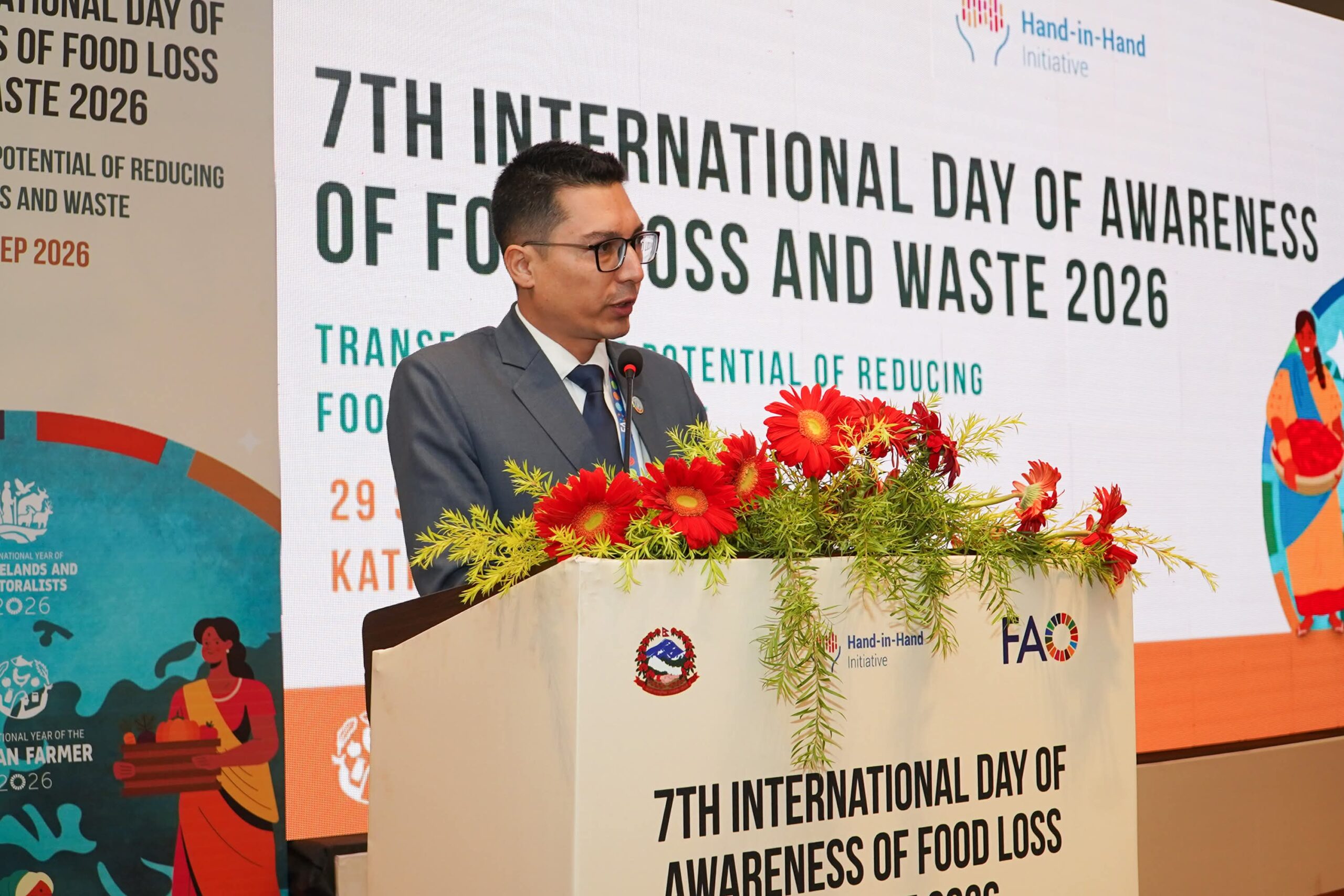
The event was organized by the Agricultural Communication and Human Resource Development Centre (ACRHDC) in collaboration with the Food and Agriculture Organization of the United Nations (FAO) Nepal to mark the International Day of Awareness of Food Loss and Waste 2026.
Participants emphasized stronger collaboration among the government, private sector, development partners, research institutions and civil society to address food losses at different stages of the food value chain.
Speaking at the event, ACRHDC Chief Sabnam Shivakoti said food losses from production to consumption directly affect farmers, consumers, businesses and the broader economy. She said weak implementation of policies, limited research and inadequate investment have hindered progress in reducing food loss and waste.
According to figures presented at the event, around 13 percent of food produced globally is lost before reaching retail markets, while another 19 percent is wasted at the retail, food service and household levels. In Nepal, an estimated 93 kg of food is wasted per person each year.
The event also highlighted that about 65 percent of household waste generated by municipalities is organic waste, while food waste accounts for around two-thirds of the total waste generated in Kathmandu.
Presenting on opportunities to reduce food loss, Sudeep Bajracharya said the issue should not be viewed solely as an agricultural concern but also as an economic, social and environmental challenge. He stressed the need to reduce losses after production by improving collection, grading, packaging, storage and market management.
FAO Assistant Representative and Acting Head Arun G.C. said food loss and waste should be addressed in connection with food security, nutrition, resource efficiency and climate resilience. When food is lost, the land, water, energy, labour and investment used to produce it are also wasted, he said, emphasizing the need for reliable data on where, why and how much food is being lost.
Participants noted that highly perishable products such as fruits, vegetables, fish, meat and dairy products face greater losses. Inadequate cold-chain facilities, weak storage infrastructure, transportation problems, unsafe packaging and limited value-addition facilities were identified as major factors contributing to food losses.
The event also featured presentations on post-harvest management, storage, processing and value-addition initiatives implemented by FAO and partner organizations. Participants called for wider adoption of appropriate technologies, greater private-sector participation, increased consumer awareness and stronger multi-stakeholder cooperation.
Concluding the event, Secretary at the Ministry of Agriculture and Livestock Development Dr Rajendra Prasad Mishra said the government was committed to reducing food loss and waste through policy reforms, research, improved data management, infrastructure development and behavioural change.
He said the growing challenge of food waste amid rapid urbanization requires coordinated efforts from the government, private sector and communities.
The recommendations made at the event are expected to contribute to identifying major sources of food loss, strengthening national measurement systems and developing short-, medium- and long-term action plans.