

Highlights:
- Rakura Tea is a premium brand under Himal Tea Industries Pvt. Ltd. that represents Nepal’s tea heritage through a focus on quality, sustainability, and wellness.
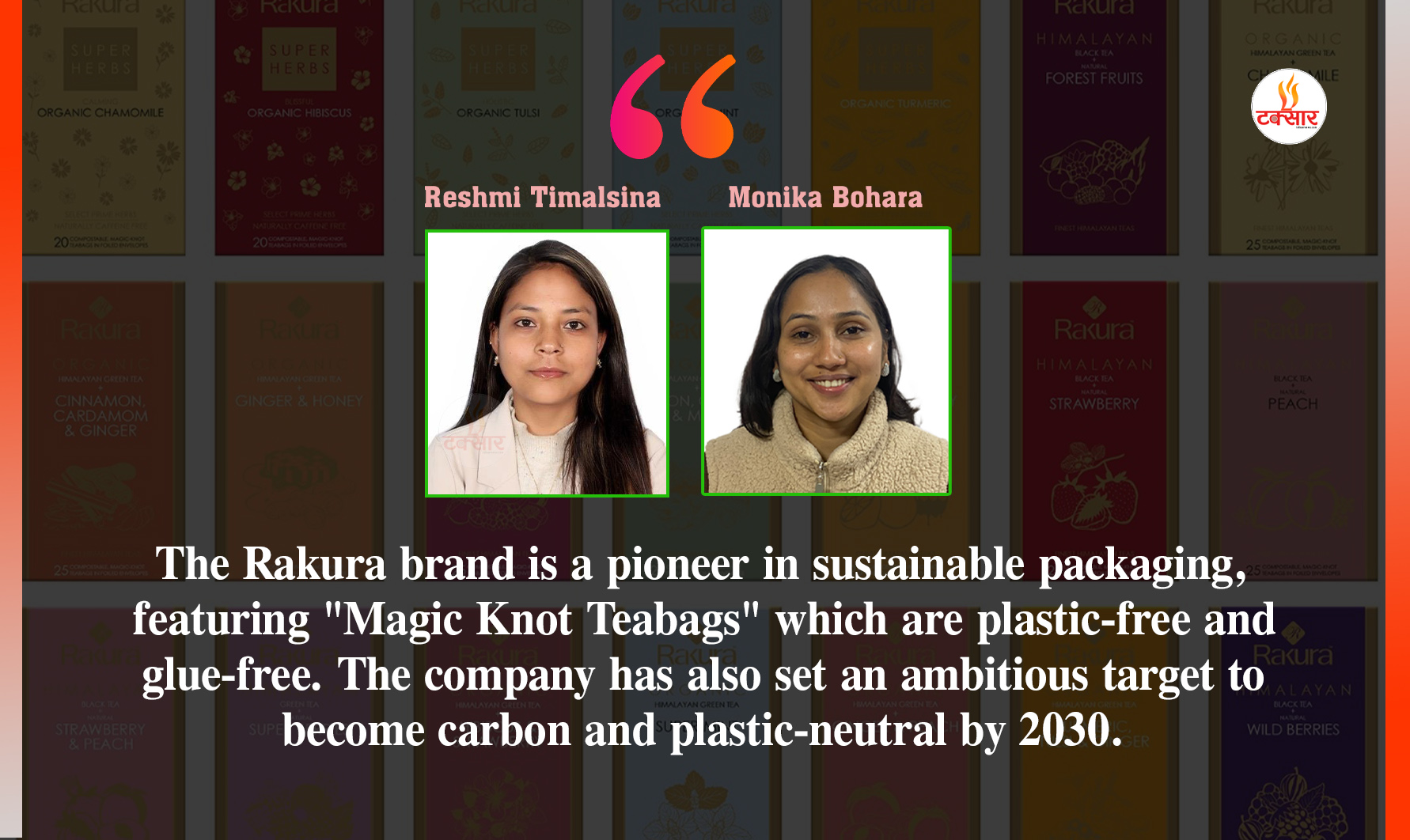
- The brand is a pioneer in sustainable packaging, featuring “Magic Knot Teabags” which are plastic-free and glue-free. The company has also set an ambitious target to become carbon and plastic-neutral by 2030.
- The global tea market is valued at over USD 60 billion and is projected to exceed USD 85 billion by 2030. This presents a significant opportunity for Rakura to capture market share by positioning itself as a sustainable, premium product.
- Rakura faces stiff competition from major producers like India and China, as well as logistical barriers due to Nepal being a landlocked country, which impacts shipping costs and delivery times. Additionally, the brand must navigate strict international quality and environmental regulations.
- To ensure long-term success, Rakura must focus on maintaining consistent quality and obtaining international certifications, investing in effective branding and storytelling, and expanding its export networks through partnerships
___Monika Bohara & Reshmi Timalsina___
Nepal is widely known for its natural beauty and cultural richness, but in recent years, it has also started gaining attention in the global business arena through its unique local products. Among them, Rakura Tea is emerging as a promising example of how a small Nepali brand can connect with international markets. At a time when global consumers are shifting toward organic, natural, and ethically produced goods, Rakura Tea represents Nepal’s potential to compete beyond its borders.
Rakura Tea, a premium brand under Himal Tea Industries Pvt. Ltd., represents Nepal’s finest tea heritage with a modern, health-conscious, and eco-friendly approach. Established in 2012, the brand name “Rakura” is derived from the initials of its founder, Ram Kumar Rathi, and stands for quality, sustainability, and wellness, symbolizing a legacy of quality, innovation, and commitment to health and sustainability. With a mission to deliver high-quality, health-conscious, and environmentally responsible teas, Rakura has positioned itself as a leader in Nepal’s tea industry and a rising name in global markets.
Rakura offers a diverse portfolio of over 21 varieties of teas and herbal infusions, including black, green, white, and caffeine-free herbal blends. Sourced primarily from Nepal’s renowned Ilam region, Rakura teas are known for their rich aroma, high-altitude purity, and antioxidant properties. The brand is a pioneer in sustainable tea packaging, introducing “Magic Knot Teabags”—a plastic-free, glue-free innovation made from unbleached, compostable filter paper. Rakura’s production facilities operate under cleanroom conditions, ensuring allergen-free, hygienic packaging. The company is committed to becoming carbon and plastic-neutral by 2030. By sourcing directly from smallholder farmers and investing in sustainable farming practices, the brand not only ensures freshness and authenticity but also contributes to the socio-economic upliftment of rural communities. Rakura’s emphasis on wellness, environmental stewardship, and ethical sourcing resonates with a growing global audience seeking products that align with their values; with a strong emphasis on health, environmental responsibility, and Nepali heritage, Rakura Tea is not just a beverage—it’s a lifestyle choice for conscious consumers worldwide.
The success of Rakura Tea is closely linked to the broader growth of Nepal’s tea industry. Nepal currently produces approximately 25 to 30 million kilograms of tea annually. A significant portion of orthodox tea, nearly 90 percent, is exported to international markets, including Germany, the United States, Japan, and the United Kingdom. Tea exports generate between NPR 3 to 4 billion annually for the Nepalese economy, making the sector an important contributor to foreign exchange earnings. While this is small compared to major producers such as China (over 3 million metric tons) and India (around 1.4 million metric tons), Nepali orthodox tea is highly valued in international markets due to its unique Himalayan flavor and premium quality. The tea sector supports more than 60,000 farmers and workers across Nepal, especially in districts such as Ilam, Jhapa, Panchthar, and Dhankuta.
Rakura Tea and Darjeeling Tea are both high-quality Himalayan teas. Darjeeling Tea from India is more famous worldwide and has a strong international reputation. Rakura Tea, a Nepali brand, is newer but stands out for its organic production, support for local farmers, and promotion of Nepali culture. While Darjeeling Tea benefits from greater global recognition and higher demand, Rakura Tea offers a similar premium quality and has strong potential to grow in international markets through its focus on sustainability and authenticity. What makes Rakura Tea unique is its commitment to sustainability and ethical business practices.
Dilmah Tea from Sri Lanka is one of the world’s most successful tea brands and is well known for its high-quality Ceylon tea. Over the years, Dilmah has built a strong international reputation through consistent quality, effective branding, and exports to many countries. Like Rakura Tea, Dilmah emphasizes authenticity, quality, and ethical business practices. However, Dilmah has a much larger production scale, stronger global distribution network, and greater brand recognition than Rakura Tea. While Rakura Tea is still developing its international presence, it follows a similar strategy by promoting premium tea, supporting local communities, and highlighting its unique origin. By learning from Dilmah’s success in branding and global marketing, Rakura Tea can strengthen its position in international markets and increase awareness of Nepali tea worldwide.
Other successful tea brands provide useful lessons for Rakura Tea. Sri Lanka’s Dilmah Tea exports to more than 100 countries and has built a strong international reputation through quality assurance and effective branding. Similarly, Twinings from the United Kingdom and Tetley from India have established themselves as globally recognized tea brands. Nepalese brands such as Nepal Tea Collective, Jun Chiyabari Tea Estate, and Kanchanjangha Tea Estate are also helping promote premium Nepali tea in international markets through organic certification and specialty tea production.
The global tea market is valued at more than USD 60 billion and is expected to exceed USD 85 billion by 2030. The demand for organic tea, herbal tea, wellness beverages, and specialty tea products continues to increase worldwide. In particular, the global herbal tea market is worth more than USD 4 billion and is growing rapidly as consumers become more health-conscious. These trends create significant opportunities for Rakura Tea to position itself as a premium and sustainable tea brand in international markets.
Nepal’s Tea Industry: The Bigger Picture
The role of Rakura Tea extends beyond commercial success. Through exports, the company contributes to Nepal’s economy by generating foreign currency, creating employment opportunities, and enhancing the international image of Nepali products. By sourcing tea directly from local farmers and promoting sustainable agricultural practices, Rakura Tea also supports rural livelihoods and community development. Despite this, Nepal still holds a very small share in the global tea market, which is dominated by large producers like India, China, and Sri Lanka. This is where brands like Rakura Tea become important: they help Nepal move from just exporting raw tea to building a strong international brand.
Role in International Business
International business involves the exchange of goods and services across countries, and Rakura Tea is actively participating in this process through exports. By entering foreign markets, the brand benefits Nepal by earning foreign currency, creating jobs for farmers and workers, and promoting Nepal’s image in international markets. By exporting to countries like those in Europe, the company must meet high quality and safety standards, which helps improve the overall quality of Nepali products.
Growing Global Demand
The global tea market is huge and expanding. There is especially high demand for organic tea, herbal tea, and specialty tea. This trend creates a big opportunity for Rakura Tea. Nepal’s unique climate and altitude give its tea a distinct flavor, which can be marketed as a premium product internationally.
Challenges in Competing Globally
Despite its strong positioning as a premium tea brand, Rakura Tea faces several challenges in international markets. One of the primary challenges is intense competition from established tea-exporting countries such as India, China, Pakistan, and Sri Lanka, which benefit from larger production capacities, stronger global brand recognition, and well-developed export networks.
Transportation and logistics also present significant barriers. As Nepal is a landlocked country, tea exports rely on transit routes through neighboring countries, resulting in higher shipping costs, longer delivery times, and potential border-related delays. Customs procedures, trade restrictions, and transportation disruptions can further affect the efficiency of exports and increase overall costs.
Another challenge is compliance with international environmental and quality regulations. Many importing countries, particularly in Europe and North America, require strict adherence to organic certification, sustainability standards, green labeling requirements, and food safety regulations. Meeting these standards can increase production and certification costs for exporters.
Limited production capacity is an additional constraint. Compared to major tea-producing nations, Nepal’s tea output remains relatively small, which may create difficulties in meeting large-scale international demand while maintaining consistent product quality. Furthermore, global awareness of Nepali tea is still limited, requiring greater investment in branding, marketing, and international promotion. Therefore, enhancing export competitiveness will require improvements in logistics, border management, production capacity, regulatory compliance, and global brand development. Addressing these challenges can strengthen Rakura Tea’s position in international markets and contribute to the promotion of Nepal as a producer of high-quality tea.
Opportunities Ahead
Despite the challenges it faces in international markets, the future outlook for Rakura Tea remains highly promising. The changing preferences of global consumers, growing awareness of health and sustainability, and advancements in technology have created numerous opportunities for the brand to expand its reach and strengthen its international presence.
One of the most significant opportunities lies in the growth of e-commerce and digital marketing. Online platforms have transformed the way consumers discover and purchase products, allowing companies to reach customers across the world without relying solely on traditional distribution channels. By utilizing social media, online marketplaces, and its own digital platforms, Rakura Tea can directly connect with international consumers and promote the unique qualities of Nepali tea to a global audience.
Another promising opportunity is the increasing demand for premium, organic, and specialty tea products. Modern consumers are becoming more conscious about their health and are actively seeking natural, chemical-free, and ethically produced beverages. Rakura Tea’s focus on high-quality organic teas, sustainable production practices, and eco-friendly packaging places the brand in an ideal position to capture these niche markets. Since premium products often command higher prices, targeting these segments can also improve profitability and brand value.
Tourism also offers a valuable opportunity for international promotion. Every year, thousands of tourists visit Nepal to experience its natural beauty, culture, and hospitality. These visitors can serve as ambassadors for Nepali products by purchasing Rakura Tea during their travels and introducing it to consumers in their home countries. In this way, tourism can help increase global awareness of both Rakura Tea and Nepal’s tea industry.
Furthermore, supportive government policies and export incentives can play a crucial role in the company’s future growth. Improved trade policies, export promotion programs, and infrastructure development can reduce barriers to international expansion and enhance the competitiveness of Nepali tea in foreign markets. Government support can also encourage innovation, quality certification, and market diversification. If Rakura Tea successfully capitalizes on these opportunities, it has the potential to strengthen its position in the global tea industry, increase export earnings, and establish itself as a leading international brand representing the quality, sustainability, and heritage of Nepal.
Learning from International Success Stories
The success of brands such as Dilmah Tea from Sri Lanka and Darjeeling Tea from India demonstrates the importance of strong branding, geographical identity, quality certification, and international marketing. Although Rakura Tea currently operates on a smaller scale, it possesses many of the characteristics required to become a recognized premium tea brand globally. By leveraging Nepal’s Himalayan heritage and expanding its international presence, Rakura Tea can further strengthen its competitive position.
The Way Forward
For Rakura Tea to achieve long-term success in international business, it must focus on several strategic areas that can strengthen its competitiveness and enhance its global presence. First and foremost, maintaining consistent product quality and obtaining internationally recognized certifications are essential. In global markets, consumers and importers place great importance on quality assurance, food safety standards, and organic certifications. Consistent quality not only builds customer trust but also helps establish a strong reputation in highly competitive international markets.
Another important factor is the development of strong branding and storytelling. Modern consumers are increasingly interested in the story behind a product, including its origin, cultural significance, and production practices. Rakura Tea can leverage Nepal’s unique Himalayan heritage, sustainable farming methods, and commitment to environmental responsibility to create a distinctive brand identity. Effective storytelling can help differentiate the brand from competitors and create a deeper emotional connection with consumers worldwide.
Expanding export networks is equally crucial for future growth. By entering new international markets and building partnerships with distributors, retailers, and online platforms, Rakura Tea can increase its global reach and customer base. Diversifying export destinations can also reduce dependence on a limited number of markets and create more stable business opportunities.
Innovation in products is another key driver of success. As consumer preferences continue to evolve, introducing new offerings such as herbal infusions, flavored teas, wellness blends, and specialty products can help the company attract a wider range of customers. Product innovation not only enhances competitiveness but also allows the brand to capitalize on emerging trends in the global beverage industry.
However, the responsibility for growth does not rest solely on the company. Strengthening Nepal’s tea industry requires close collaboration among the government, private sector, and tea farmers. Government support through favorable export policies, infrastructure development, and promotional initiatives can improve international competitiveness. At the same time, private businesses and farmers must work together to ensure sustainable production, maintain quality standards, and increase productivity. Through collective efforts and a shared vision, Rakura Tea can strengthen its position in global markets while contributing to the overall growth and international recognition of Nepal’s tea industry.
(Writers are students of MBA 3rd Trimester, SAIM College)