

Kathmandu_
A landmark report released by the Association of Chartered Certified Accountants (ACCA) in early 2026 has delivered a clear message to the global business and finance community: the traditional “linear career” is no longer fit for purpose.
Titled Career Paths Reimagined: The Changing World of Work, the report argues that the long-established career ladder—moving predictably from trainee to manager, manager to director, and eventually to CFO—is rapidly being dismantled by technological disruption, shifting workforce expectations, and economic uncertainty.
Based on a global survey of more than 2,600 finance professionals and 145 employers, the ACCA research reveals a fundamental change in how career success is defined. Job titles and long tenure in a single organisation are losing their dominance, while flexibility, adaptability and skills are emerging as the new measures of professional value.
According to the report, 51 percent of finance professionals worldwide believe flexible career paths will completely replace linear ones within the next decade. In the UK, that figure rises to 55 percent, signalling a strong regional consensus that the traditional career model is approaching its end.
Rise of the portfolio career
Rather than remaining in one organisation for decades, professionals are increasingly embracing what the ACCA describes as a “portfolio career”. This model involves shorter stints in roles, movement across sectors, and lateral or “sideways” career moves designed to build skills rather than simply secure promotions.
Such flexibility, the report notes, allows professionals to remain relevant in a labour market increasingly shaped by automation and artificial intelligence. As roles evolve more rapidly than ever, adaptability has become a strategic necessity rather than a personal preference.

Key drivers reshaping careers
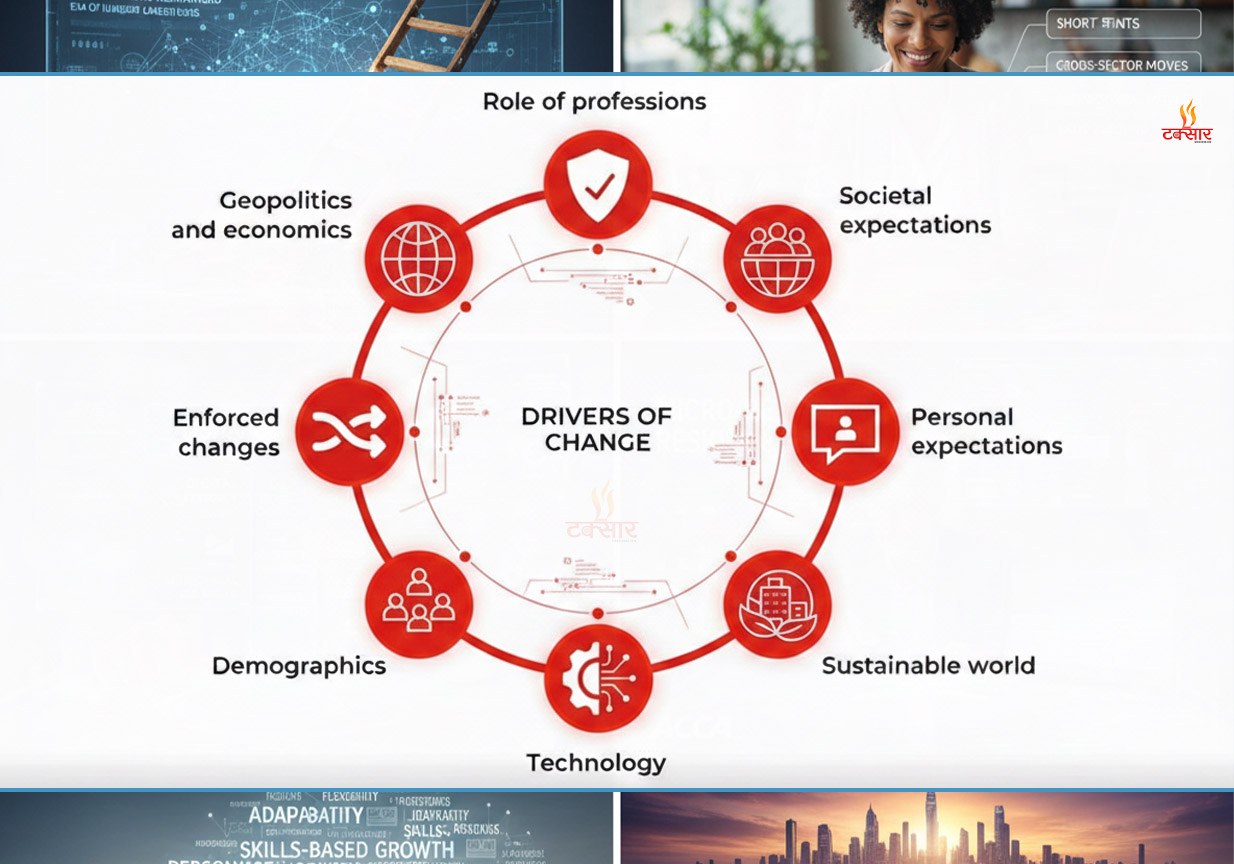
The ACCA identifies five major forces driving the shift away from linear careers.
Technology and the AI boom emerged as the most significant factor. Automation and artificial intelligence are not only replacing routine accounting tasks but also redefining entry-level roles. New professionals are now expected to possess advanced data skills and the ability to work alongside intelligent systems from the outset.
Flattening organisational structures are also reshaping progression. To remain agile, many organisations are removing layers of middle management, breaking the traditional ladder. In its place, companies are creating specialist roles focused on areas such as ESG reporting, cybersecurity finance and data governance.
Changing personal expectations have further accelerated the shift. Many professionals are rejecting the “always-on” work culture and opting instead for a “work-life blend”. This has led to the emergence of “micro-retirements”—short, planned career breaks used for reskilling or personal renewal rather than postponed leisure at the end of working life.
Demographic change and increased longevity mean careers now often span five decades or more. The report argues that such long working lives demand flexibility, allowing individuals to reinvent themselves at different stages rather than remain locked into a single role.
Finally, economic volatility has made sideways moves a strategic response to uncertainty. When promotions are limited, gaining experience across departments or industries can provide both resilience and long-term progression.

Skills over titles
To succeed in this evolving environment, the ACCA emphasises the importance of developing a “T-shaped” skill set—deep technical expertise combined with broad digital, analytical and interpersonal capabilities.
While accounting fundamentals remain important, professionals are increasingly expected to generate value through data-driven insights. Data literacy, including proficiency in tools such as Python, R and SQL, is becoming a baseline requirement, alongside the ability to interpret and visualise complex information.
The report also highlights the growing importance of human judgement. As automation expands, finance professionals are expected to act as ethical guardians, ensuring integrity, transparency and trust in AI-driven systems—roles that technology alone cannot fulfil.
Resilience and agility are equally critical. Forty-four percent of respondents identified resilience as one of the most important capabilities for future success, reflecting the pace and scale of ongoing change.
Implications for employers and professionals
The ACCA warns that organisations clinging to rigid, linear career models risk losing talent. Employers are encouraged to create lateral opportunities, invest in continuous upskilling, and recognise the value of candidates with diverse professional experiences.
For individuals, the message is equally clear. Career progression can no longer be passively awaited. Instead, professionals must actively design their own paths through continuous learning, curiosity and “hyper-personalised” career planning aligned with their strengths and life circumstances.
According to the report, 57 percent of professionals now see skill development as the single most important factor for their career progression over the next decade.

A future of opportunity
While the decline of the linear career may feel unsettling, the ACCA presents the shift as a source of opportunity rather than loss. Flexible, skills-based career paths open doors across industries, geographies and specialisations, offering professionals greater control over their working lives.
As the report concludes, the traditional career ladder may be gone—but in its place stands a more dynamic, personalized and resilient model of professional growth. For those willing to adapt, the future of work offers unprecedented possibilities.